
What Skipping This Costs You By Spring
Put this off for another season and the math usually isn't in your favor. A spring that's already stretched thin from a humid summer and a few hundred cold-weather cycles doesn't just wear out quietly — it snaps, often on the coldest morning of the year when metal is least forgiving. A track that's a quarter-inch out of alignment in October can be dragging and grinding by January, after salt spray and ice have had a few months to work into the rollers. None of this is dramatic until it is: a door that won't open before work, an opener motor burning out because it's been fighting a bad balance all winter, or a cable that frays and lets the door drop. Twenty minutes now is cheaper than any of those mornings.
Tools You'll Need
- A flashlight or work light
- A stepladder
- A socket wrench or screwdriver set
- Silicone-based garage door lubricant (not WD-40, which attracts grit)
- A soft cloth and a stiff brush or vacuum attachment
- Fresh batteries for your remote and keypad, if needed
The 20-Minute Routine
- Look at the tracks. Shine the flashlight along both vertical tracks and check for dents, rust, or debris buildup — road salt and winter grit collect here more than people expect. Wipe them down with a dry cloth; skip anything oily, since lubricant doesn't belong on the tracks themselves.
- Check and tighten hardware. Go panel by panel with your wrench and snug up any loose roller brackets, hinges, or track bolts. Garage doors flex every time they open and close, and a few hundred cycles a year will work bolts loose, especially on older installations.
- Lubricate the moving parts. Apply silicone lubricant to the rollers, hinges, and the springs themselves (a light coat, not a soak). This is the single best defense against the stiff, slow movement that shows up once temperatures drop and metal contracts.
- Test the auto-reverse safety feature. Place a 2x4 flat on the ground where the door closes. The door should hit it and reverse immediately. If it doesn't, stop using the opener until this is fixed — this is a safety system, not a convenience feature.
- Check the balance. Disconnect the opener (pull the release cord) and lift the door halfway by hand. It should stay in place on its own. If it drifts up or crashes down, the springs are out of balance — note it and move on, don't try to adjust it yourself.
- Inspect the weatherstripping. Look at the rubber seal along the bottom of the door and the sides. Cracked or flattened seals let cold air, moisture, and salt slush in, which speeds up rust on the bottom panel and hardware. Replacing it is simple and cheap if it's worn.
- Clean the photo-eye sensors. Wipe the small sensor lenses near the bottom of the tracks with a soft cloth. Dust, cobwebs, or a crooked sensor is one of the most common reasons a door refuses to close in fall and winter.
What's Safe for You to Handle vs. What Needs a Technician
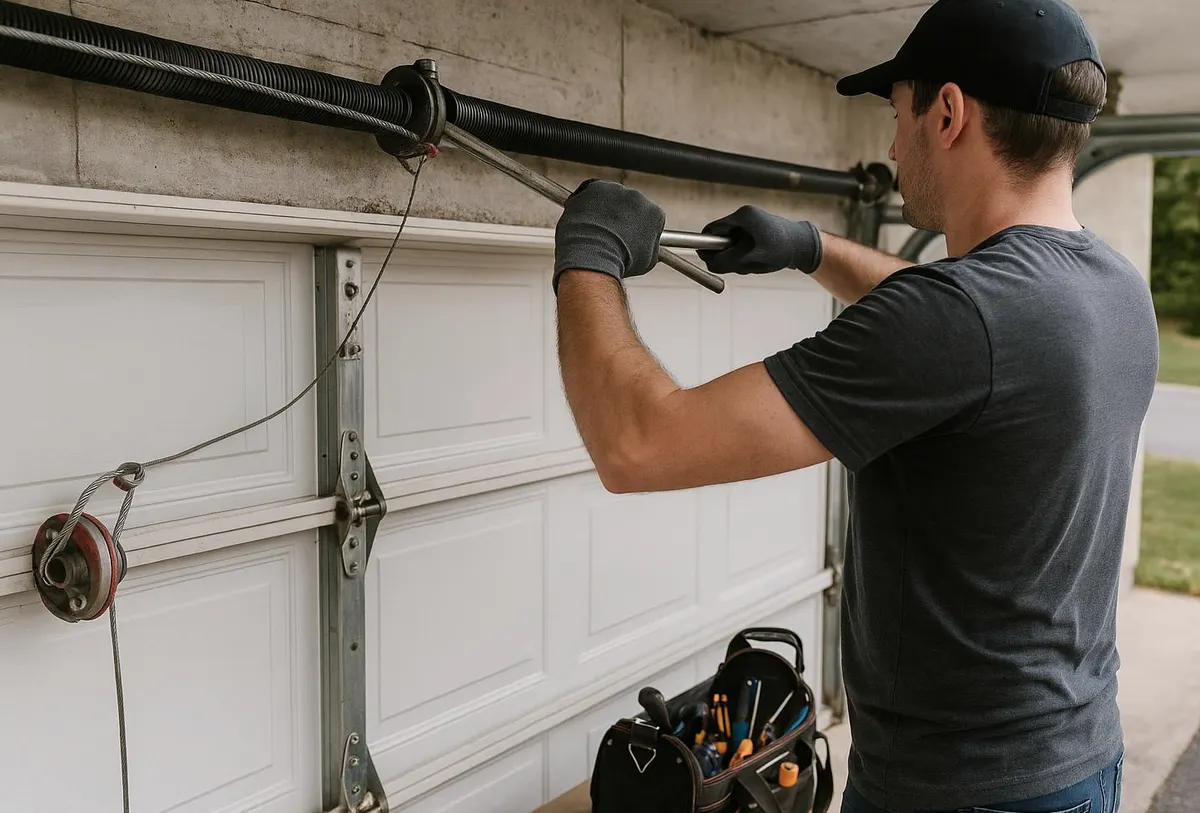
Everything above — lubrication, hardware tightening, cleaning tracks and sensors, testing auto-reverse, checking weatherstripping — is reasonably safe for a homeowner with basic tools and some patience. What's not a DIY job: anything involving the torsion springs, cables, or a door that's out of balance. These parts are under heavy tension, and adjusting or replacing them without the right equipment is a genuine injury risk, not just a repair risk. If your balance test failed, if you see a frayed cable, or if the door is noticeably harder to lift than it used to be, that's the line where this becomes a call instead of a project.
When to Call Sheffield Lake Garage Door
If your twenty-minute check turns up a spring that's clearly worn, a door that won't balance, or an opener that isn't reversing correctly, that's exactly what our Garage Door Maintenance visits are built to catch and fix before winter makes it worse. If a spring has already failed or the door won't move at all, our Spring Replacement service gets it back in safe working order without you having to touch the tensioned hardware yourself.
If you're in Sheffield Lake, Avon Lake, Lorain, or anywhere nearby in Lake County and want a second set of eyes on your door before the real cold sets in, give Sheffield Lake Garage Door a call — we'll have it handled before the first hard freeze.