
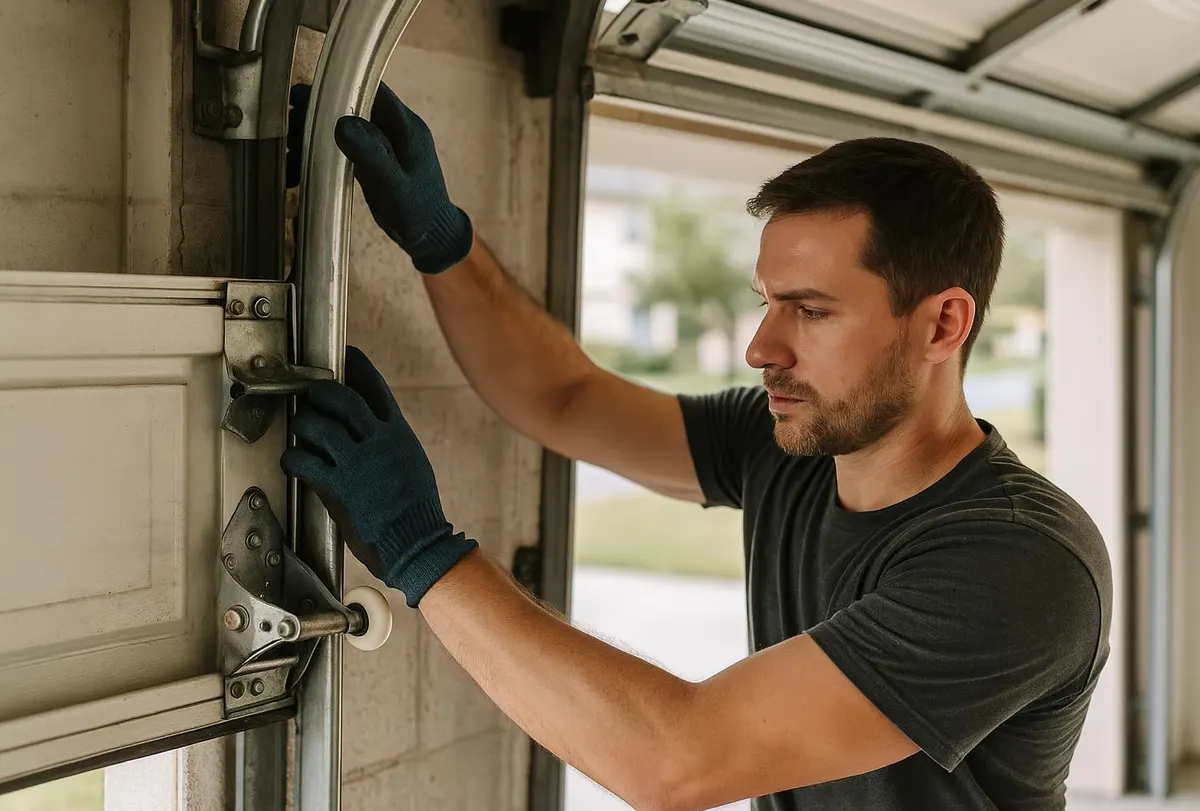
You're pulling into the driveway after work, hit the opener, and there it is—a sound that wasn't there last week. Maybe it's a grinding scrape as the door climbs the track, a sharp pop that makes you jump, or a rattle you can feel through the steering wheel before you even park. Garage doors don't usually fail quietly. They tell you something's wrong first, often for days or weeks before a real breakdown. The trick is knowing which noise points to which problem.
Grinding: Rollers, Track, or the Opener Gear
What it sounds like: A steady, mechanical grinding or scraping that happens through most of the door's travel, often worse right when the door starts moving on a cold morning.
A technician checks these in order:
- Rollers first. Nylon rollers wear flat or crack over years of use, especially once road salt and winter grit work into the track. A flat-spotted roller grinds with every rotation. The fix is roller replacement, usually done a few at a time rather than all at once unless the whole set is original.
- Track alignment next. If rollers look fine, the track itself may be bent or pulling away from the wall, forcing rollers to grind against the edge instead of rolling smoothly. Fix: loosen mounting brackets, realign the track with a level, and re-tighten.
- Opener gear last. On chain-drive openers, the plastic drive gear inside the motor housing can strip over time, producing a grinding sound right at the unit itself rather than along the door. This means a gear kit replacement or, if the motor is old, a full opener swap.
Squealing: Almost Always Lubrication or Bearings
What it sounds like: A high-pitched squeal on the way up or down, often loudest on the first use of the day.
Checked in this order:
- Dry hardware. This is the most common cause by far. Humid summers wash lubricant out of hinges and rollers, and then cold weather thickens whatever's left until it stops doing its job. The fix is simple: a silicone- or lithium-based garage door lubricant on hinges, rollers, and the torsion spring—never household oil or WD-40, which attract grit.
- Worn roller bearings. If lubrication doesn't quiet things down within a cycle or two, the bearings inside the rollers themselves are likely worn out and need replacing rather than oiling.
- Spring coils rubbing. A torsion spring that's lost its factory lubrication or shifted slightly on the shaft can squeal with each twist. This one calls for a professional look, since adjusting a loaded spring without the right bars is genuinely dangerous.
Popping: Usually the Spring, Sometimes the Track
What it sounds like: One loud bang or a series of sharp pops, sometimes with the door suddenly feeling heavier or uneven afterward.
- Torsion spring fatigue is the first suspect. Springs are rated for a set number of cycles, and metal fatigue combined with sharp overnight temperature drops—common once fall settles in around Lake County—can cause a spring to pop, shift, or even break outright. If the door suddenly feels much heavier to lift by hand, treat this as the likely cause. The fix is full spring replacement, done in pairs even if only one has failed, since the other is usually close behind.
- Bent or separated track sections. A popping sound localized to one spot as the door passes can mean a track seam has opened up or a section has worked loose from its bracket. Fix: re-secure or replace the affected track section.
- Panel flex on older steel doors. Thinner, older panels can pop slightly as they flex in sharp temperature swings. This is usually cosmetic, but it's worth a quick inspection to rule out the two causes above first.
Rattling: Start With the Hardware
What it sounds like: A loose, vibrating rattle through the whole cycle, sometimes paired with visible shaking in the panels.
- Loose bolts and brackets. Vibration from thousands of open-close cycles works fasteners loose over time. Checking and re-torquing hinge, track, and roller bracket bolts is the first and easiest fix.
- Worn hinges. Hinges with elongated or egg-shaped holes let panels shift slightly with each cycle, producing a consistent rattle. These need replacing, not just tightening.
- Loose chain or belt on the opener. A chain-drive opener with a sagging chain will slap against the rail. This is a quick tension adjustment.
- Worn rollers, as a last check. If everything else is tight, loose-fitting rollers in worn track can be the final source of rattle.
Why Fall Is the Right Time to Sort This Out
Lake County's swing from humid summers into cold, salted winters is hard on garage door hardware. Moisture promotes rust on springs and tracks, and once temperatures drop, old lubricant thickens and metal contracts, turning a minor noise into a stuck or broken door on the coldest morning of the year. A noise you notice now is easier and cheaper to address before ice and road salt season is in full swing.
When to Call Sheffield Lake Garage Door
If lubricating hinges and rollers doesn't quiet a squeal within a day or two, if a popping sound shows up alongside a door that's suddenly harder to lift, or if you hear grinding that doesn't improve after a basic check, it's time to call in a technician rather than keep testing it yourself. We handle everything from garage door maintenance tune-ups that catch worn rollers and dry hardware before they fail, to spring replacement when a torsion spring has reached the end of its life. Both jobs involve the kind of tools and safety steps that aren't worth improvising on a loaded spring system.
If your garage door in Sheffield Lake, Avon Lake, Lorain, or anywhere else in Lorain County is making a noise that wasn't there last month, give us a call before the first hard freeze turns a minor fix into an emergency call.